
We all have those days.
The shoes are in the wrong place. Breakfast isn’t the right colour. The wrong cup has been used. And suddenly something that seemed very small has become VERY BIG.
For little ones, emotions can feel overwhelming.
Children are still learning what their feelings are, how to recognise them and, importantly, what to do with them.
That’s one of the reasons movement can be such a lovely tool.
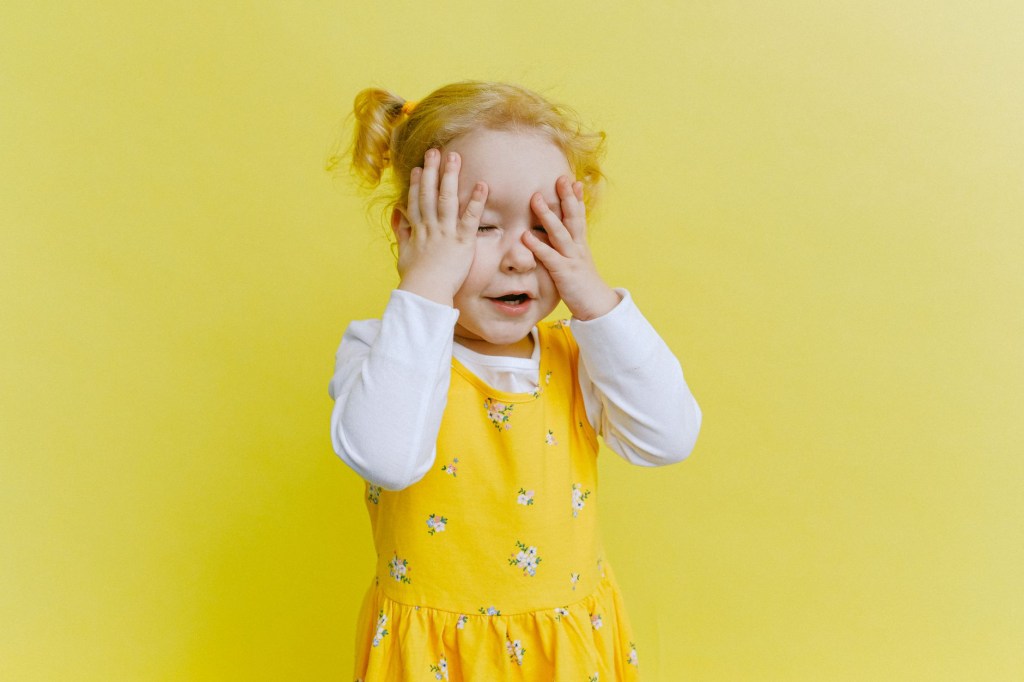
Children don’t always have the words
Adults have years of experience putting feelings into words.
We can say, “I’m feeling overwhelmed today,” or “I need a few minutes to myself.”
Young children are still developing these skills.
Sometimes a big feeling comes out as shouting, crying, running around, refusing to cooperate or simply becoming very quiet.
It doesn’t necessarily mean they’re being difficult.
Sometimes their feelings are simply bigger than their ability to explain them.
Where can yoga fit in?
Children’s yoga can introduce simple ways of moving and breathing that can be used alongside other healthy ways of managing emotions.
For example, we might encourage children to notice their breathing, stretch their bodies, move energetically or slow things down.
None of these things are a magic solution to a meltdown, and they shouldn’t be presented that way.
But over time, children can begin to develop an awareness of how their bodies feel when they are excited, cross, tired or calm.
That awareness can be really useful.
Movement before calm
One thing we shouldn’t forget is that children don’t always need to “calm down” by sitting still.
Sometimes they need to MOVE first.
A few animal walks around the room, some big stretches or a little dancing can provide an opportunity to release some energy before moving into something quieter.
This is one of the reasons children’s yoga can be so flexible.
There might be lots of movement one minute and a quiet breathing game the next.
Try this at home
Next time your little one has lots of energy, try making a simple movement game together.
Say:
“Can we stretch like a cat?” 🐈
Reach your arms forwards, stretch through your body and then relax.
Then try:
“Can we breathe like a sleepy bear?” 🐻
Take a slow breath in and an easy breath out.
Don’t worry about getting the breathing “right”. Keep it relaxed and playful.
You could even let your child choose the next animal.
The aim isn’t to force them to calm down. It’s simply to introduce movement and breathing as things they can explore.
Creating little moments of connection
Sometimes the most valuable part of these activities is actually the time spent together.
You don’t need a special yoga mat, a quiet house or half an hour of uninterrupted time.
You can have a two-minute movement break between activities.
You can stretch together before bedtime.
You can take a few big breaths after a busy day.
And sometimes you can simply have a cuddle.
All of these little moments help children learn that their bodies, feelings and emotions are things they can gradually get to know.
Big feelings are part of growing up
We don’t want children to believe that “negative” emotions are bad.
Being angry, frustrated, sad, excited or worried is part of being human.
The goal isn’t to stop children having big feelings.
It’s to help them gradually develop the tools and confidence to recognise and work through them.
And sometimes, that starts with something as simple as a stretch, a silly animal walk or taking a breath together.
That’s what we love about children’s yoga at Mummy & Baby Buddies.
It’s not about perfect poses.
It’s about giving children another way to move, explore and connect with themselves and the people around them.
#ChildrensYoga #KidsYoga #ToddlerYoga #BigFeelings #EmotionalDevelopment #MindfulKids #ParentAndChild #MummyAndBabyBuddies


